Announcements
Jul 10th
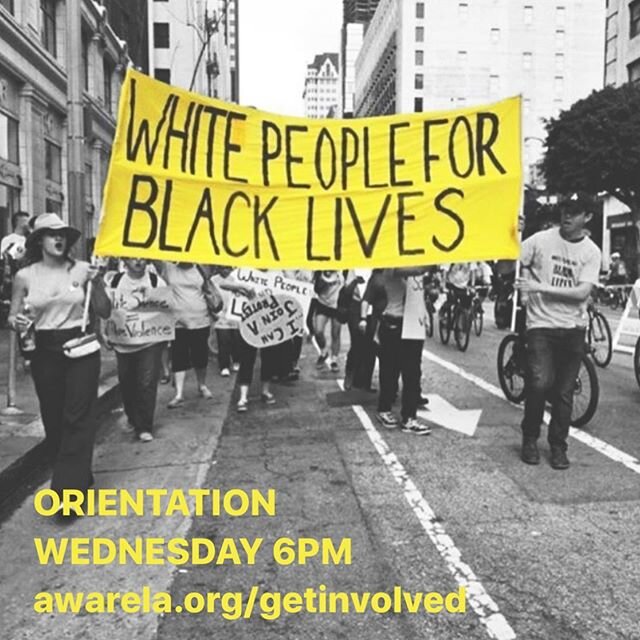
AWARE-LA’s Unmasking Whiteness Institute, July 22-25, 2010
Click on the flyers below and Institute Information Sheet to read more about this year’s institute:
Two ACLU Attorneys Named "Best LGBT Lawyers Under 40"
originally posted by Robert Nakatani, LGBT & AIDS Project for Blog of Rights: Official Blog of the American Civil Liberties Union [click here]
Jul 29th
The National LGBT Bar Association recently announced the recipients of its inaugural Best LGBT Lawyers under 40 Award, and we’re happy to note that two ACLU attorneys are among that select group. Christine Sun, senior counsel for the ACLU LGBT & AIDS Project since 2005, has many gay rights accomplishments under her belt in her short career. She was lead attorney in Nguon v. Wolf, the Southern California case that led to the federal court ruling that a high school student cannot be “outed” to her parents without her consent. Christine was also counsel on Chandler v. Barker which recently struck down a Tennessee family court practice in divorce cases of prohibiting the same-sex partner of a parent from staying the night when the children are present in their home. Most recently, Christine represented Constance McMillen in her successful litigation against the rural Mississippi school district that refused to let her bring her girlfriend to the prom and then cancelled the prom when told they had to.
Sharon McGowan is currently working in the Appellate Section of the Civil Rights Division of the Department of Justice but worked for five years for the ACLU LGBT & AIDS Project beginning in August of 2004. Sharon’s primary legal achievement has been as lead counsel in Schroer v. Library of Congress. Sharon’s vigorous representation of former Special Forces veteran Diane Schroer led to groundbreaking legal precedent that refusing to hire someone because he or she is transitioning violates the federal civil rights law banning discrimination based on sex. Schroer was awarded nearly $500,000 to compensate her for the discrimination, which included the maximum the federal judge was permitted to award for emotional distress damages.
We’re very proud of Christine and Sharon for this award and their many accomplishments.
Domestic Workers Get Overtime Pay But No Union
originally posted by Daisy Hernandez for Colorlines [click here]
Jul 29th
![]()
After a six year fight, New York is now the first state to grant domestic workers the right to overtime pay, one day off per week, disability benefits, and unemployment insurance.
The Domestic Workers Bill of Rights, signed into law by Gov. David Paterson earlier this month, is significant. It’s breached through nearly a century of institutional neglect and standardized some basic human rights. But it does have one debatable feature: It doesn’t allow collective bargaining among domestic workers, the bulk of whom in New York are women of color. In fact, the New York State’s Department of Labor will be conducting a study with the explicit purpose of proving “once and for all, that collective bargaining would not be useful to domestic workers.”
Organizers pushing to get the bill passed let this happen, sacrificing the collective bargaining option for the new protections. They felt collective bargaining wasn’t critical right now because there isn’t a counterpart on the side of employers with whom domestic workers could bargain as a group. According to Domestic Workers United, the lack of that employer counterpart proved advantageous these last six years since there wasn’t organized opposition to the bill.
But if domestic workers don’t have a union holding lawmakers and employers accountable, what assurance is there that this bill will be effective or even enforced?
Immigrant workers may suffer the most without the right to collective bargaining. According to a survey by the Domestic Workers United, “an overwhelming majority of domestic workers are immigrants and 76 percent are not citizens.” Given the language barriers and fear of deportation, these workers won’t contact the Department of Labor. Collective bargaining would fill in the breach.
However, according to union organizer Stephen Lerner in the New Labor Forum, it might be time for the labor movement to go “beyond collective bargaining as we know it.”
Lerner writes: “The lesson of recent years is that none of these [union] models alone—or in combination— work because they are all, in some way, trying to repair and recreate the now-dead social compact-based labor relations system of the last century.”
He suggests organizers “narrow the scope” of their demands and it’s true that the work of Domestic Workers United, CAAV and Coalition for Humane Immigrant Rights of Los Angeles have proved that domestic workers can organize without the legal right to collective bargaining.
In an industry like domestic work, where workers negotiate their terms based on distinct levels of dependency and in an isolated work space, standardizing human rights might set a precedent for new labor relations and new forms of organizing.
Organizers nationwide are beginning to push for bills similar to New York’s. It’s not clear how much of a precedent New York is going to set. The California law that’s going to be proposed still demands collective bargaining rights for domestic workers.
Publishing Cesspool: James Edwards Writes a Book
originally posted by Alexander Zaitchik for Hatewatch | Southern Poverty Law Center [click here]
Jul 29th
After a long hiatus, James Edwards’ hate-fueled radio show, “The Political Cesspool,” returned to production this June. Syndicated by the Liberty News Radio Network, the 30-year-old Edwards has reestablished the show as a leading forum for neo-Nazis, Holocaust deniers, and white supremacists. Since launching in 2004, the show — the history of which is chronicled here — has also become an occasional forum for these radicals’ more mainstream admirers, such as “Political Cesspool” guest (and MSNBC commentator) Pat Buchanan. Edwards himself has netted several appearances on CNN.
Now, it appears, the show’s returning host sees himself as mainstream enough to engage in a conservative talk radio host rite of passage: the patriotic manifesto. And from a distance, Edwards’ newly self-published effort might be confused with any number of Conservative Book Club bestsellers. As with recent titles by commentators Sean Hannity and Mark Levin, the cover displays the author’s face set against a giant rippling American flag.
But such confusion is only possible at a distance, and then only briefly. Very little further examination is required to detect all the hallmarks of an amateur self-publishing effort with an assist from CreateSpace — beginning with a title devoid of wit, even by the standards set by Edwards’ radio program: Racism, Schmacism: How Liberals Use the “R” Word to Push the Obama Agenda. Then there is the cheap Photoshop job of the cover, above which is the megalomaniacal boast that its author is “the most controversial talk show host in America.”
The premise of Racism, Schmacism, to the extent that it has a coherent premise, is that liberals have defined “racist” to mean “any conservative white person.” Thus, any attempt by conservatives to shake off or avoid the racist label is bound to fail. Given this inevitability, Edwards believes, conservatives should embrace race consciousness and get aggressive. Edwards early on stresses his agreement with Rush Limbaugh in the view that John McCain could have won in 2008 if only he hadn’t run such a timid and racially sensitive campaign. Writes Edwards: “Just imagine how different the campaign would have turned out if McCain had been running TV ads focusing on Obama’s shockingly frank hatred of white people.”
As of this writing, there are eight reviews of the book on the Amazon page, all of them kind. Two of these reviewers state their intention to use the book in conversations with Tea Partiers. Writes “Stephen E. Romer”: “I am going to buy several more to take to TEA PARTY meetings!! YOU SHOULD TOO!!”
A reviewer using the handle Bookmaven wrote: “This book clearly explains what I have been trying to tell fellow Tea Partiers for the last couple of years!!”
Who is buying Racism, Schmacism? According to Amazon’s automatically generated sales bundling program, shoppers are most often throwing it in their cart alongside M. Stanton Evans’ defense of Joseph McCarthy, Blacklisted by History, a book whose fortunes have spiked following that author’s appearances on Fox News’ “Glenn Beck” show. Other titles purchased along with Edwards’ book include those by the late white nationalist Sam Francis, former Klan leader David Duke, liberal-bashing commentator Ann Coulter, and Pat Buchanan.
In Historic Vote, UN Declares Access to Water a Fundamental Right
originally posted by Democracy Now! [click here]
Jul 29th
Watch on AWARE-LA TV on the date of the post. After that, watch in the Democracy Now! archives.
The United Nations General Assembly has declared for the first time that access to clean water and sanitation is a fundamental human right. In a historic vote Wednesday, 122 countries supported the resolution, and over forty countries abstained from voting, including the United States, Canada and several European and other industrialized countries. There were no votes against the resolution. We speak with longtime water justice activist, Maude Barlow.
Patrick Cockburn on Missing Billions in Iraq and Soaring Cancer & Infant Mortality Rates in Fallujah
originally posted by Democracy Now! [click here]
Jul 29th
Watch on AWARE-LA TV on the date of the post. After that, watch in the Democracy Now! archives.
In Iraq, an official audit by the US Special Investigator for Iraq Reconstruction found that the Pentagon cannot account for almost $9 billion taken from Iraqi oil revenues between 2004 and 2007 for use in reconstruction. Meanwhile, a new medical study has found dramatic increases in infant mortality, cancer and leukemia in the Iraqi city of Fallujah, which was bombarded by US Marines in 2004. We speak with Patrick Cockburn, Middle East correspondent for the London Independent. [includes rush transcript]
Our Bags are Packed, Part II
originally posted by Khadine Bennet, Staff Attorney, ACLU of Illinois for Blog of Rights: Official Blog of the American Civil Liberties Union [click here]
Jul 28th
(Originally posted on RHRealityCheck.)
I love road trips. Actually I’m addicted to road-trips.
My first road-trip was back in ‘99, the summer I graduated from college. I convinced my friend Ben that it would be a good idea to pack our stuff into a Penske Truck and move from Jamaica Plain, MA to Berkeley, CA. I don’t know what excited me more – actually living in California (aka the activist promised land) or the 5-day, 11 state road-trip we were about to embark on.
We made mix tapes that served as the perfect soundtrack to our experience; we saw parts of the country that I was always curious about; we ate awful rest area “food”; and we learned that the salt lakes in Utah are really made of salt (I was curious, we pulled over, I tasted it and (1) it was salty and (2) my tongue was numb for the next half hour).
The day after we parked the Penske in Berkeley, I got my first post-college, California job. For a period of about two weeks, I worked as a canvasser for the Women’s Choice Clinic in Oakland – a feminist clinic that provided a full range of reproductive health care. Each day we were dropped off in a different city in the Bay Area, and spent about 4 hours going door to door, talking with strangers about the services the clinic provided – services that included family planning, STD prevention and treatment, education about reproductive health, abortion care, prenatal care and deliveries. We also asked strangers to consider making a donation to support the work of the clinic; donations that would enable the medical staff and counselors to continue providing sliding scale reproductive healthcare for women who otherwise might not be able afford it. In some ways, my canvassing job was like an extension of the road-trip. Everyday for two weeks, I took a trip to a new part of the bay to talk to people I’ve never met about reproductive health and access.
Though my time as a canvasser was short, I learned a lot about the reproductive health barriers faced by the people in my new home town. I got a sense of how difficult it was for small independent health facilities to raise enough money to provide healthcare, pay doctors and pay security; I learned that the abortion provider only came on certain days of the week because he was needed at other clinics, and because the clinic couldn’t find a full time provider. I learned that talking to strangers about helping to pay for someone else’s medical care, especially for their abortion, could lead to a spectrum of responses – from frothing-at-the-mouth anger, to indifference, to tears and story telling.
Why am I telling you about my first road-trip and my first California job?
Well, those were two pretty pivotal experiences in my life. One of these experiences led to my now chronic road-trip addiction, the other reaffirmed my commitment to working on reproductive health, access and justice issues, and both of those experiences come to mind as Allie and I embark on the Road Trip for Reproductive Health and Access.
Each day for about two weeks, Allie and I will head out in a van and travel to at least one Illinois city to talk with healthcare providers, sexual assault counselors, health officials and everyday people about reproductive health and access. This time, instead of asking for clinic donations and educating folks about barriers to reproductive healthcare for women in Oakland, I’ll be the one receiving an education – I’ll be the one who listens and learns more about barriers that people in Illinois cities face when attempting to access and provide reproductive care, services, and information.
It’s eleven years later but some things will never change – I’ll have an opportunity to learn more about parts of the state that I’ve been curious about; I’ll get to create a soundtrack for our trip – instead of mix tapes, we’ll listen to the never ending i-pod playlist; and I’ll get to eat that awful rest area “food” that I secretly love. One thing will change though - I will not, I repeat, will not pull off on the side of the road to taste “natural wonders” of the city we’re visiting … unless that natural wonder involves ice cream.
The ACLU of Illinois is embarking on a project to put a human face on the status of reproductive health and access to care in Illinois. Over 10 days in July and August, we will be traveling the state, listening to women, men, young people and doctors throughout Illinois as they share stories about the barriers they face in accessing and providing reproductive health care and information. As we travel more than 2000 miles, through 13 Illinois cities and towns, we will learn more about the challenges everyday people face in filling prescriptions for birth control, in finding doctors who will provide needed services, including abortions, in dealing with Medicaid funding or in receiving comprehensive, age-appropriate sexual health education in public schools.
You can follow along at acluroadtrip.org or on twitter and facebook.
Do you have a story to tell? We’re listening. Email us at stories@aclu-il.org or visit action.aclu.org/rhstories.
House Votes to Fix Drug Laws
originally posted by Jamilah King for Colorlines [click here]
Jul 28th
![]()
More good news. The Fair Sentencing Act passed today in the House.
The legislation would reduce disparities in crack cocaine and powder cocaine sentencing, which has overwhelmingly swelled the black prison population over the past two decades. Since 1986, a person convicted of simple possession of crack cocaine has gotten the same mandatory sentence as a person with 100 times that amount of powder cocaine, reports the AP. And the sentences were almost always racially skewed: 85 percent of people convicted of crack offenses are black, even though blacks make up just 30 percent of crack users.
The new bill mandates that the ratio be lessened to 18 to 1; still not perfect, but much closer to equal and a reluctant compromise by drug sentencing reform advocates.
We noted earlier this week that advocates were pushing for lawmakers to tackle the bill before August recess. They’ve succeeded.
Calling today’s passage a “historic moment,” Jasmine L. Tyler, deputy director for the National Drug Policy Alliance, said in a statement: “I’m overjoyed that thousands of people, mostly African American, will no longer be unjustly subjected to the harsh sentencing laws enacted in the 1980s.”
On the compromise, Tyler added, “The compromise is not perfect and more needs to be done, but this is a huge step forward in reforming our country’s overly harsh and wasteful drug laws.”
The bill is now headed to President Obama’s desk where it’s likely to be signed into law.
Would You Ask This Man For His Papers?
originally posted by Daisy Hernandez for Colorlines [click here]
Jul 28th
![]()
Kudos to the ACLU for this new video exposing the racist underpinnings driving Arizona’s SB 1070 law, portions of which were temporarily halted today by a federal judge.
The two-minute video shows an older brown man doing yardwork in Arizona. He’s done this kind of work for 15 years, he tells us, but SB 1070 makes him afraid that because of the color of his skin and his work, he’ll be asked to prove his citizenship status.
The catch? The brown man is the president of the board of directors for the ACLU in Arizona, Roberto Reveles. That’s probably his own yard he’s cleaning.
But the message is clear. Unless SB1070 is dismissed by the federal courts, anyone who’s brown remains vulnerable.
New Reports Describe the “Green-Washing” of Nativist Hate
originally posted by Walter Ewing for Immigration Impact [click here]
Jul 28th
In a new report, the Southern Poverty Law Center (SPLC) describes the rejuvenated efforts of anti-immigrant groups to repackage themselves as environmentalists who are trying to save the United States from the supposed ecological ills of “over-population.” According to the report, entitled Greenwash: Nativists, Environmentalism & the Hypocrisy of Hate, the two-faced nature of these efforts is “astounding” given the dismal environmental records of the organizations and political candidates to whom nativist groups tend to contribute funds. Moreover, this “green-washing” of the nativist agenda also amounts to a white-washing of the anti-immigrant movement’s white-nationalist roots.
As the SPLC report describes:
In the last few years, right-wing groups have paid to run expensive advertisements in liberal publications that explicitly call on environmentalists and other ‘progressives’ to join their anti-immigration cause. They’ve created an organization called Progressives for Immigration Reform that purports to represent liberals who believe immigration must be radically curtailed in order to preserve the American environment. They’ve constructed websites accusing immigrants of being responsible for urban sprawl, traffic congestion, overconsumption and a host of other environmental evils.
Yet these sorts of arguments, the SPLC report notes, “have in the last 15 years been
rejected by the mainstream of the environmental movement as far too simplistic … most conservationists have come to believe that many of the world’s most intractable environmental problems, including global warming, can only be solved by dealing with them on a worldwide, not a nation-by-nation, basis.” Furthermore, the anti-immigrant groups engaged in the green-washing of their ideologies belong to the national network created by John Tanton, who has long been “far more concerned with the impact of Latino and other non-white immigration on a ‘European-American’ culture than on conservation.”
The SPLC report echoes the findings of another recent report from the Center for New Community (CNC), which explores “how anti-immigrant forces have corrupted the dialogue on population and the environment.” In that report, Apply the Brakes: A Report on Anti-immigrant Co-optation and the Environmental Movement, CNC points out that “anti-immigrant activists belonging to the neo-Malthusian tradition claim that populations are constrained by the carrying capacity of the environment, and that population growth causes environmental degradation.” Within this narrow and inaccurate worldview, “people become pollutants, with all the racial overtones of such a social construction.”
Both the SPLC and CNC reports lay bear the ugly historical roots and flawed intellectual underpinnings of these faux environmentalists. The environmental rhetoric being spouted by anti-immigrant activists is nothing more than window dressing designed to lend a green tinge to an anti-immigrant ideology. As the SPLC report points out, “the greenwashers are wolves in sheep’s clothing, right-wing nativists who are doing their best to seduce the mainstream environmental movement in a bid for legitimacy and more followers.” This is a siren’s call that serious environmentalists should resist.
Photo by mugley.